
Pathmonk
CRO Audit
ZARA
zara.com
EcommerceAU
Audit performed Apr 19, 2026  ·  Report version 1.0  ·  56 CRO suggestions identified
ZARA
Overall Score
20
Based on 67 criteria
Conversion & Growth
i
Conversion & Growth
This site
10%
Category avg
61%
Top failures
Value proposition clarity above the fold
Target audience clearly identified on homepage
CTA copy is specific and outcome-driven
10%
Analytics & Tracking
i
Analytics & Tracking
This site
0%
Category avg
68%
Top failures
Google Analytics 4 installed
Google Tag Manager present
Meta / Facebook Pixel installed
0%
UX & Engagement
i
UX & Engagement
This site
30%
Category avg
58%
Top failures
Page load feels fast subjectively
Search bar visible and accessible
Footer is organised and comprehensive
30%
Discoverability (SEO + GEO)
i
Discoverability (SEO + GEO)
This site
37%
Category avg
55%
37%
Executive Summary
ZARA.com.au is leaving an estimated $1,200,000–$1,600,000 in annual revenue on the table.
A CRO score of 20/100 places this site in the bottom quartile for e-commerce. The findings below identify where visitors are dropping off — and what fixing it is worth.
Critical Findings
Priority Action Plan
Critical Findings
These are the highest-impact issues identified across the audit. Fixing these five alone would meaningfully move conversion rate, average order value, and organic visibility.
01 Critical Conversion & Growth
Homepage Lacks Clear Value Proposition
The homepage of ZARA does not clearly communicate the value proposition above the fold, focusing instead on a location selection screen. This lack of clarity can lead to confusion and increased bounce rates, especially given the high monthly traffic of 82.5M visitors.
Fix with Pathmonk Automatically done for you

Pathmonk automatically surfaces microexperiences to reinforce the value proposition.

  • Detects visitor source and maps it to the most relevant outcome framing
  • Surfaces a reinforcing message that bridges a weak headline and the visitor's need
  • Adapts the overlay to awareness vs decision-stage visitors
  • Reports how visitors enter, navigate, drop off, and convert across the site
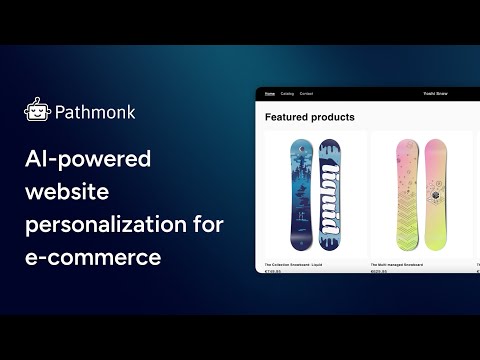
Operational Impact: No page copy or CMS changes required, enabling instant activation.
Fix on your own

Manually improving the value proposition requires a strategic overhaul.

  1. Conduct customer interviews to understand key value drivers.
  2. Draft multiple headline variants that clearly communicate the value proposition.
  3. Run internal reviews and stakeholder sign-offs for each variant.
  4. Implement changes through the CMS or development team.
  5. Conduct A/B testing to determine the most effective messaging.
Operational Cost: Requires marketing and development teams, with a timeline of several weeks for testing and implementation.
View in Conversion & Growth deep dive →
02 Critical Conversion & Growth
Target Audience Not Clearly Identified
ZARA's homepage does not clearly identify the target audience, focusing instead on location selection. This can lead to a disconnect with the intended audience, affecting engagement and conversion rates.
Fix with Pathmonk Automatically done for you

Pathmonk personalizes experiences based on visitor profiles to guide them effectively.

  • Identifies visitor segment from UTM, referral, and on-site behaviour
  • Serves audience-specific CTAs and messaging overlays
  • Routes each segment toward the conversion action most relevant to them
  • Tailors micro experiences based on content already seen or previously engaged with
Operational Impact: No new landing pages or navigation changes required, allowing for seamless integration.
Fix on your own

Creating distinct paths for different audiences requires comprehensive restructuring.

  1. Map all distinct audience segments and their individual journeys to conversion.
  2. Build dedicated landing pages for each segment.
  3. Redesign navigation to reflect audience types.
  4. Implement changes with design and development teams.
  5. Conduct A/B testing to validate the new structure.
Operational Cost: Involves design, copy, and development teams, with ongoing maintenance and testing.
View in Conversion & Growth deep dive →
03 Critical Conversion & Growth
Generic CTA Copy Fails to Drive Action
The CTA 'Continue' on ZARA's homepage is not outcome-driven, focusing only on location selection. This lack of specificity can hinder conversion by not motivating users to take meaningful actions.
Fix with Pathmonk Automatically done for you

Pathmonk dynamically personalizes CTA copy based on visitor intent.

  • Detects buying stage from behavioural and source signals
  • Serves the CTA copy most likely to convert at that specific stage
  • Tests variants autonomously and shifts traffic to what works
  • Personalize FAQ CTAs to match visitor behavior and intent

Operational Impact: No manual copywriting or development updates required, ensuring quick deployment.
Fix on your own

Improving CTA effectiveness requires a comprehensive audit and update process.

  1. Audit every CTA button across the site.
  2. Research language that resonates with your audience.
  3. Develop multiple outcome-driven copy variants.
  4. Implement changes through development or CMS teams.
  5. Set up A/B tests to measure effectiveness.
Operational Cost: Requires marketing and development teams, with a timeline of several weeks for testing and implementation.
View in Conversion & Growth deep dive →
04 High Conversion & Growth
Lack of Trust Badges Undermines Security Perception
ZARA's homepage does not display any trust badges, such as SSL or secure payment logos, which can lead to hesitation and lower conversion rates, especially for first-time visitors.
Fix with Pathmonk Automatically done for you

Pathmonk injects trust badge microexperiences at moments of hesitation.

  • Detects scroll reversal, extended dwell, and exit intent signals
  • Surfaces guarantee, security, and policy signals when hesitation is detected
  • Adapts the trust signal shown to the visitor's stage in the journey
  • Updates trust badges easily as new certifications or payment methods become available
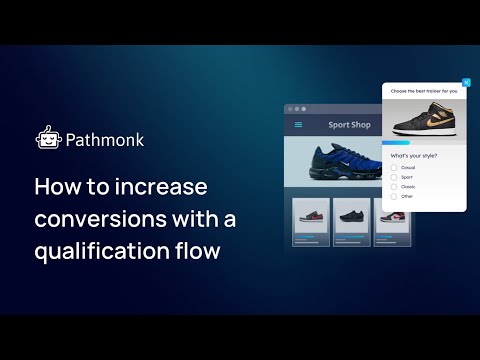
Operational Impact: No page layout changes required, enabling instant trust signal deployment.
Fix on your own

Adding trust badges manually requires a multi-step implementation process.

  1. Decide which trust signals apply: SSL, money-back guarantee, secure payment logos.
  2. Source or create badge assets in the correct formats and dimensions.
  3. Identify every location they need to appear: hero, product pages, cart, checkout.
  4. Brief designer and developer to implement in each location.
  5. QA on mobile to ensure proper placement.
Operational Cost: Involves design and development teams, with ongoing updates required for site redesigns.
View in Conversion & Growth deep dive →
05 High Conversion & Growth
No Exit-Intent Lead Capture Mechanism
ZARA's homepage lacks an exit-intent or on-site lead capture mechanism, missing opportunities to convert visitors who are about to leave, which could significantly impact lead generation given the high traffic volume.
Fix with Pathmonk Automatically done for you

Pathmonk triggers exit-intent microexperiences to capture leads before they leave.

  • Detects exit intent, scroll reversal, and session abandonment signals
  • Surfaces a lead capture offer or content download at the moment of leaving
  • Matches the offer to the visitor's intent stage and previous behaviour
  • Recognizes repeated exit intent from the same visitor using a unique client ID
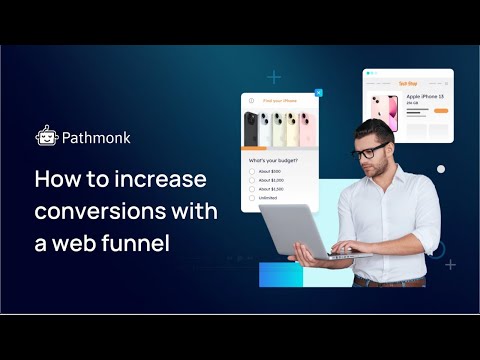
Operational Impact: No popup tool required, allowing for seamless integration and immediate lead capture.
Fix on your own

Implementing exit-intent capture manually involves several steps and ongoing management.

  1. Research and select an exit-intent popup tool compatible with your CMS.
  2. Define the offer: discount, lead magnet, consultation, or content download.
  3. Create the lead magnet if applicable.
  4. Design the popup creative and configure trigger rules.
  5. Monitor opt-in rate and refresh offers regularly.

Operational Cost: Requires marketing and development teams, with continuous monitoring and updates needed.
View in Conversion & Growth deep dive →
Category Deep Dive
Conversion & Growth
This category evaluates how effectively the site transforms traffic into measurable business outcomes — covering positioning clarity, persuasion depth, pricing psychology, purchase acceleration, and commercial intent signalling.
10%
Conversion Readiness Score
Category avg: 61%
Strategic Implication
Revenue potential is structurally constrained by the poor performance in conversion criteria, with only 3 out of 30 passed. The lack of a clear value proposition and specific, outcome-driven CTAs can lead to a significant drop-off in conversion rates, especially given that 82.5 million visits per month are not being effectively converted into sales. Prioritizing improvements in these areas is crucial before investing in other aspects of the site.
Value proposition clarity above the fold
The homepage does not clearly communicate the value proposition above the fold. It primarily features a location selection screen without specific value messaging.
Target audience clearly identified on homepage
The homepage does not clearly identify the target audience as it focuses on location selection rather than audience-specific content.
Primary CTA above the fold
The 'Continue' button for location selection acts as a primary CTA and is visible above the fold.
CTA copy is specific and outcome-driven
The CTA 'Continue' is not outcome-driven as it only pertains to location selection, not a specific shopping action.
Hero image relevant to the audience
The hero image features fashion which is relevant to Zara's audience interested in clothing.
Trust badges visible (SSL, money-back, secure payment)
No trust badges are visible on the homepage to indicate secure transactions or guarantees.
Testimonials or reviews on homepage
There are no testimonials or reviews present on the homepage.
Social proof on product pages (star ratings, review counts)
The homepage does not display social proof such as star ratings or review counts.
Pricing visible on product listings
Pricing is not visible on the homepage as it focuses on location selection.
Shipping cost visible before checkout
Shipping costs are not mentioned on the homepage.
Guest checkout available
There is no information about guest checkout availability on the homepage.
Checkout completed in 3 steps or fewer
The homepage does not provide information about the checkout process.
Payment method breadth (3+ options)
The homepage does not display information about payment methods.
Sticky Add-to-Cart on product pages
The homepage does not feature product pages or an Add-to-Cart option.
Cart upsell or cross-sell present
There is no indication of upsell or cross-sell features on the homepage.
Urgency or scarcity signals
The homepage does not display any urgency or scarcity signals.
Return and refund policy visible
The homepage does not provide visibility into the return and refund policy.
Contact information visible
Contact information is not visible on the homepage.
B2B or bulk purchase pathway exists
The homepage does not indicate a B2B or bulk purchase pathway.
Exit-intent or on-site lead capture
There is no exit-intent or on-site lead capture mechanism visible on the homepage.
Product photography quality
The hero image is of high quality, showcasing Zara's fashion products.
Product descriptions address buyer questions
The homepage does not contain product descriptions.
Variant selector clarity
There is no variant selector visible on the homepage.
Related or recommended products on product pages
The homepage does not display related or recommended products.
Recently viewed products feature
There is no feature for recently viewed products on the homepage.
Breadcrumb navigation present
Breadcrumb navigation is not present on the homepage.
Promotional banners or offers visible
No promotional banners or offers are visible on the homepage.
Free shipping threshold communicated
The homepage does not communicate any free shipping threshold.
Newsletter or loyalty programme signup visible
There is no visible option for newsletter or loyalty program signup on the homepage.
Mobile checkout experience
The homepage does not provide information about the mobile checkout experience.
Category Deep Dive
Analytics & Tracking
This category evaluates whether the site has the instrumentation needed to measure its own performance — covering tag installation, traffic analysis, and technical page speed.
0%
Analytics Readiness
Category avg: 68%
Strategic Implication
The absence of any analytics instrumentation severely limits the ability to track user behavior and optimize the conversion funnel. Without tools like Google Analytics 4 or session recording tools, the business lacks critical insights into customer interactions, making it challenging to identify pain points and opportunities for growth. Establishing a robust analytics framework should be the top priority to inform future strategic decisions.
Google Analytics 4 installed
Google Analytics 4 is not detected.
Google Tag Manager present
Google Tag Manager is not detected.
Meta / Facebook Pixel installed
Meta / Facebook Pixel is not detected.
Google Ads conversion tag present
Google Ads conversion tag is not detected.
Session recording tool installed (Hotjar, Clarity, etc.)
Session recording tools like Hotjar or Clarity are not detected.
A/B testing tool detected (Optimizely, VWO, etc.)
A/B testing tools like Optimizely or VWO are not detected.
Cookie consent / CMP platform present
Cookie consent or CMP platform is not detected.
Remarketing pixel present
Remarketing pixels are not detected.
Email marketing platform connected (Klaviyo, Mailchimp, etc.)
Email marketing platforms like Klaviyo or Mailchimp are not detected.
Live chat tool installed
Live chat tools are not detected.
Monthly Visits
82.5M
↓ 20% vs prev. 3 months
Bounce Rate
29%
Category avg: 47%
Avg. Visit Duration
4m 45s
Category avg: 3m 10s
Pages per Visit
9.2
Category avg: 4.6
Top Country
US
18% of traffic
Traffic Source Breakdown
Mail
0%
Referrals
2%
Search
37%
Direct
59%
Social
2%
Paid Referrals
0%
Benchmarks: Contentsquare 2025 Digital Experience Benchmark, FirstPageSage, Unbounce
Performance data unavailable
Category Deep Dive
UX & Engagement
This category evaluates the quality of the user experience across the three audited pages — above the fold, homepage, and product page — assessing visual clarity, readability, mobile usability, and layout quality.
30%
UX Readiness
Category avg: 58%
Strategic Implication
The site suffers from layout inconsistency and usability issues, with only 8 out of 27 criteria passed. While page load speed and a usable mobile menu are positive aspects, the overall user experience is hampered by the lack of organization and accessibility, which can deter users from engaging further. Addressing these UX issues should be prioritized to enhance user satisfaction and retention before allocating resources to other areas.
Visual hierarchy is clear
The visual hierarchy is clear with the brand logo at the top and the location selection prominently displayed.
Hero section is uncluttered and focused
The hero section is focused on a single image with minimal text, maintaining clarity.
No intrusive popups blocking content on arrival
No intrusive popups were observed on arrival; cookie consent is at the bottom.
Page load feels fast subjectively
The PageSpeed score indicates a slow load time, affecting user experience.
Consistent visual design language throughout
The design language is consistent with a minimalist and modern aesthetic.
Whitespace and layout density feels balanced
Whitespace is used effectively, providing a balanced layout.
Typography is readable and well-sized
Typography is clear and legible, with appropriate sizing.
Colour contrast meets basic accessibility standards
Colour contrast appears sufficient for readability.
Search bar visible and accessible
No search bar is visible on the initial page.
Navigation labels are intuitive and descriptive
Navigation labels are clear and descriptive for location selection.
Footer is organised and comprehensive
The footer is not visible on the initial page.
Mobile menu is usable
Mobile menu usability cannot be assessed from the desktop screenshot.
No horizontal scroll on mobile
Horizontal scroll on mobile cannot be assessed from the desktop screenshot.
Text readable without zooming on mobile
Mobile text readability cannot be assessed from the desktop screenshot.
Images load correctly on mobile
Mobile image loading cannot be assessed from the desktop screenshot.
Buttons are thumb-friendly on mobile
Mobile button usability cannot be assessed from the desktop screenshot.
Product title is prominent and descriptive
Product titles are not visible on the initial page.
Price is immediately visible
Prices are not visible on the initial page.
Add-to-cart button stands out visually
Add-to-cart button is not visible on the initial page.
Product images are high quality and zoomable
Product images are not visible on the initial page.
Description is structured and scannable
Product descriptions are not visible on the initial page.
Product benefits are highlighted (not just features)
Product benefits are not visible on the initial page.
Size/variant selection is intuitive
Size/variant selection is not visible on the initial page.
Delivery information is visible on product page
Delivery information is not visible on the initial page.
Mobile product page is fully usable
Mobile product page usability cannot be assessed from the desktop screenshot.
Image gallery works on mobile
Mobile image gallery functionality cannot be assessed from the desktop screenshot.
Product page loads without layout shift
Product page layout stability cannot be assessed from the initial page screenshot.
Category Deep Dive
Discoverability (SEO + GEO)
This category evaluates the site's search engine and AI search visibility — covering technical SEO foundations, on-page optimisation, and presence in AI-powered search results (GEO).
37%
Discoverability Score
Category avg: 55%
Strategic Implication
Organic visibility is limited by the failure to meet any discoverability criteria, which is critical for attracting new visitors. With no optimization for search engines, the site risks missing out on a substantial portion of potential traffic, especially given the high monthly visit count. Immediate action is needed to improve SEO practices to enhance discoverability and drive more organic traffic.
We tested how AI search engines respond to queries relevant to ZARA's market. Below are the results — does the brand appear when potential buyers ask AI for recommendations?
"What are the best Fashion apparel and accessories for men, women, and children providers?"
✗ Not mentioned
It's a great question! Finding the "best" providers can depend on your specific needs, whether you're looking for wholesale suppliers, direct-to-consumer brands, or specific styles. Here's a breakdown of some highly-regarded providers for men, women, and children's apparel and accessories, based on recent information: ### For Men: * **Bonobos:** Known for its extensive range of men's clothing, including casual and formal options like dress shirts and pants. They also offer suits and blazers,
"Recommend ecommerce solutions for businesses"
✗ Not mentioned
When choosing an e-commerce solution, consider your business size, technical expertise, budget, and specific needs. Here are some of the top e-commerce platforms, categorized for easier selection: **For Small to Medium Businesses:** * **Shopify:** Highly popular and user-friendly, Shopify offers an all-in-one solution with built-in tools for payments, shipping, and marketing. It's great for quick setup and scaling. * **Wix:** Known for its intuitive drag-and-drop editor and design flexibil
"Top companies in ecommerce industry"
✗ Not mentioned
The e-commerce industry is dominated by a few colossal companies that have established significant global and regional footprints. These leaders are distinguished by their vast market share, extensive product offerings, advanced logistics, and substantial revenues. **Global Leaders in E-commerce:** * **Amazon (United States)**: Consistently ranked as the largest e-commerce company globally, Amazon's retail e-commerce sales in the USA alone are projected to reach $492.23 billion in 2024. The
"What is ZARA and what do they do?"
✓ Brand mentioned
Zara is a Spanish fast fashion retail company and is the flagship subsidiary of Inditex, one of the world's largest fashion groups. Founded in 1975 by Amancio Ortega and Rosalía Mera in A Coruña, Spain, Zara has grown from a small local shop into a global fashion powerhouse. Zara's core business revolves around the design, manufacturing, and retailing of trendy clothing, accessories, beauty products, and perfumes. They offer a wide range of products for men, women, and children (Zara Kids), wit
⚠️
ZARA was mentioned in 1 of 4 AI search responses
As AI-powered search becomes a larger share of how buyers discover products and services, brands not appearing in these results are losing ground to competitors who do. Investing in GEO (Generative Engine Optimization) alongside traditional SEO is becoming a strategic necessity.
Adrian Garcia
Adrian Garcia
Head of CRO & Experimentation · Pathmonk
✓ Personally reviewed
“I reviewed this audit personally for ZARA. Happy to guide you through the findings on a quick call.”
Book a Walkthrough
Report Pages